Both let you charge at home. A Tesla Wall Connector is wired into your panel and charges faster. A NEMA 14-50 is a 240-volt outlet for a mobile charger: cheaper up front and portable, but slower. Drive a lot? Go Wall Connector. Short daily drives? A 14-50 is often plenty.
We install both across Clearwater and Tampa Bay. Here is how they compare, and how to pick the one that fits your car, your panel and how you drive.
Side by Side
| Tesla Wall Connector | NEMA 14-50 outlet | |
|---|---|---|
| What it is | A charger wired directly to your electrical panel | A 240-volt outlet. You plug in a mobile charger. |
| Top home charging speed | Up to 44 miles of range per hour on a Model 3 or Model Y, on a 60-amp circuit (Tesla's figure) | Slower. Limited by the mobile charger you plug in. |
| Works with | Teslas, and other EVs whose charging port matches the plug | Any EV that comes with, or can use, a 14-50 mobile charger |
| Outdoor use | Outdoor-rated and hardwired, so nothing to unplug and carry off | Needs an outdoor-rated outlet and cover. The mobile charger can be unplugged and taken. |
| Extras | Wi-Fi updates, sharing power between several chargers and locking it to your car | Simple. The outlet itself has no software. |
| Best for | Daily commuters, road-trippers and two-EV homes | Lower-mileage drivers and households who want flexibility |
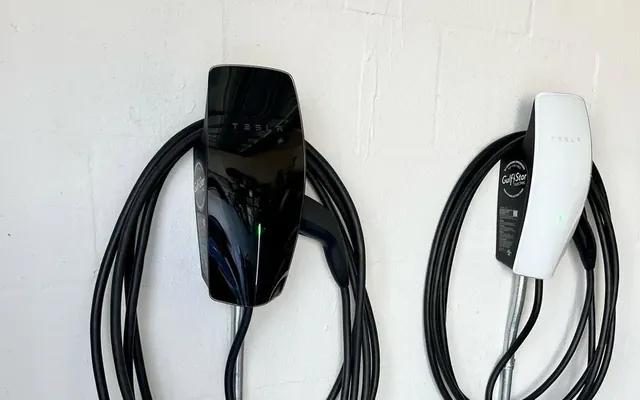
The Tesla Wall Connector
What It Does Well
- Fast home charging. Tesla lists up to 11.5 kW, which is up to 44 miles of range per hour on a Model 3 or Model Y when it sits on a 60-amp circuit. On a 50-amp circuit, Tesla lists up to 37 miles per hour. On a 40-amp circuit, Tesla lists up to 30.
- Sized to your panel. We set the charger's output to match the circuit and what your panel can carry, so the Wall Connector works in most homes.
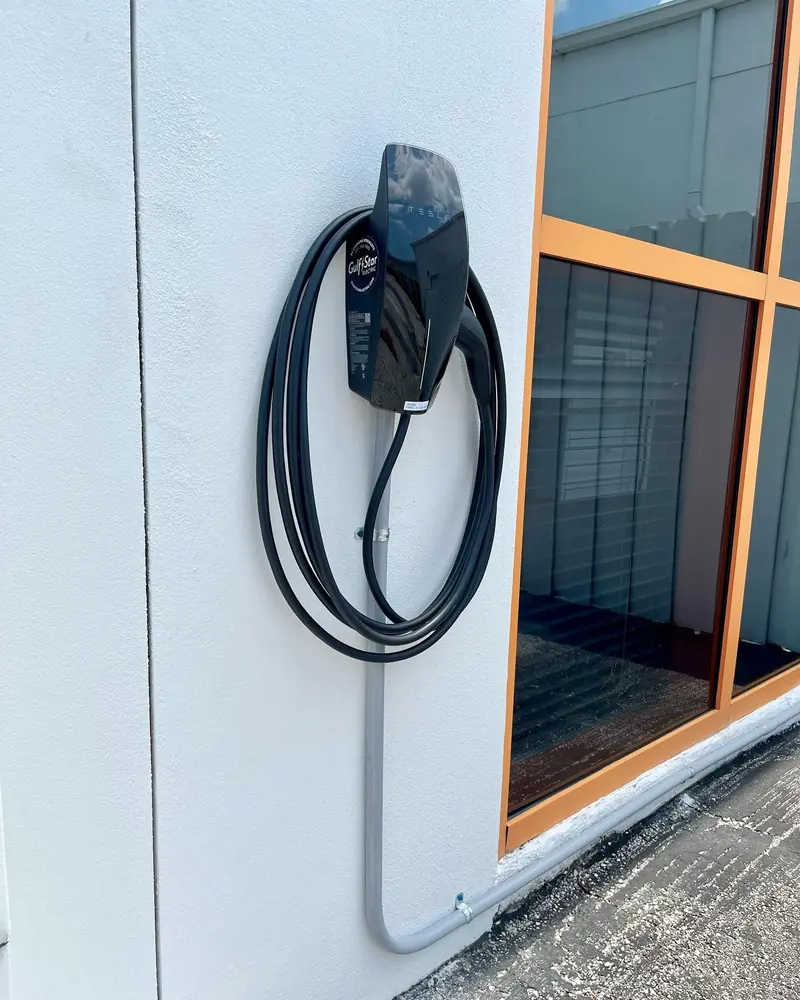
- Built for outside. The Wall Connector is outdoor-rated and hardwired, which makes it the more secure pick for a driveway.
- Smart features. Wi-Fi updates, remote troubleshooting, power sharing with other Wall Connectors on one circuit, and it can be set to charge only your car.
- A long cable. The current model comes with a 24-foot cable, which reaches most garage and driveway layouts.
- It can move with you. If you sell your home, the Wall Connector can be removed and reinstalled at your new place.
Trade-Offs to Know
- Higher upfront cost than an outlet, since you are buying the charger and a hardwired install. Check Tesla's shop for today's price.
- The plug has to match your car. Many newer EVs use the same plug style as Tesla. Others use the J1772 plug and need an adapter or a different charger. We confirm this before install.
- Wi-Fi setup can take patience. Getting the unit connected and registered is part of our install, so you are not doing it alone.
The NEMA 14-50 Outlet
What It Does Well
- Works with many EVs. A 14-50 is a common 240-volt outlet. Lots of electric cars can charge from it with the right mobile charger.
- Lower upfront cost, especially if you already own a mobile charger with a 14-50 adapter.
- Flexible. The outlet stays put, and the mobile charger can travel with you.
Trade-Offs to Know
- Slower charging than a Wall Connector running at full power.
- You may need to buy the charger. New Teslas stopped including the Mobile Connector in 2022, so many owners buy one separately.
- The install has to be right. A 14-50 carries a heavy load for hours at a time. Cheap outlets, loose connections or the wrong wire size are a common cause of heat damage and outlet failures.
- Less secure outside. A mobile charger left plugged into an outdoor outlet can be unplugged and taken.
Wall Connector for Speed, 14-50 for Flexibility
A Wall Connector is wired into your panel and charges faster. A NEMA 14-50 costs less up front and moves easily, but charges slower.
Which One Should You Pick?
Pick the Wall Connector if you commute, take road trips, share the house with a second EV or charge outside. The faster charging and outdoor build are worth it for most daily drivers.
Pick a NEMA 14-50 if you drive short distances each day, already own a mobile charger or want the lowest upfront cost.
Not sure? That’s fine! You don’t need to know your panel size. A technician checks it on site first. You can also answer a few quick questions on our request form to help us prep.
Why the Install Matters As Much As the Charger
Both pull a lot of power for hours. The circuit, wire, breaker and connections all have to be right, and your panel needs room. That’s why we check the panel first and build to meet or exceed National Electrical Code requirements. Charger tripping or hot? Read 3 dangers of a wrongly installed home EV charging station, and give us a call.
Older Pinellas homes sometimes need a panel upgrade before a Level 2 charger. Learn more about electrical panel upgrades.
Quick questions
Is a Tesla Wall Connector Faster Than a NEMA 14-50?
Usually, yes. On a 60-amp circuit, Tesla lists the Wall Connector at up to 44 miles of range per hour for a Model 3 or Model Y. A mobile charger on a 14-50 outlet charges slower.
Can a Non-Tesla EV Use a Tesla Wall Connector?
Often! It depends on your car’s charging port. Many newer EVs use Tesla’s plug style. Others use J1772 and need an adapter or a different charger. We confirm before we install.
Can I Plug a Tesla Charger Into the Wall?
Yes, with the Tesla Mobile Connector and the right adapter. A regular 120-volt outlet works but is the slowest (trickle charging). A 240-volt NEMA 14-50 is much faster. A Wall Connector isn’t plugged in at all. It’s wired into your panel on its own circuit.
How Fast Does a NEMA 14-50 Charge a Tesla?
Slower than a Wall Connector. On a 14-50, the Mobile Connector caps the speed. Tesla lists the Wall Connector at up to 37 miles of range per hour on a 50-amp circuit and up to 44 on 60 amps for a Model 3 or Model Y. Some cars, like the Model 3 Standard Range, take less power either way.
Tesla Mobile Connector Vs Wall Connector: What Is the Difference?
The Mobile Connector is a portable cord that plugs into an outlet like a 14-50. The Wall Connector is hardwired, faster, and adds Wi-Fi updates, power sharing and a long cable. For a dedicated spot, most daily drivers are happier with the Wall Connector.
Do I Need a Panel Upgrade for Either One?
Not necessarily! It depends on your panel and what else your home runs. A technician checks on site and lets you know before any work starts.